
In the consultation we observed that 1 in 4 women present a tumour that comes from the muscular wall of the uterus.
What are uterine fibroids? Does a uterine fibroid have to be operated on?
- What are uterine fibroids? Does a uterine fibroid have to be operated on?
- More than 25% of women over 30 years old have fibroids of different sizes 99% of fibroids are benign, indicating that less than 1% will be malignant
- The form of cancer is called Leiomyosarcoma
Most fibroids are asymptomatic, especially the smaller ones and as long as they are not inside the uterine cavity having contact with the endometrium. The fibroids that grow towards the external area can reach sizes of up to 20 cm and therefore produce pressure inside the abdomen with pain or on the intestine, such as producing constipation or on the bladder, producing the sensation of having to go to urinate continuously.
Fibroids growing inside the uterine cavity may decrease fertility, cause menstrual pain (dysmenorrhea), or increase the amount of vaginal bleeding (hypermenorrhea).
The diagnosis is almost always made through ultrasound with the possibility of describing the size, shape, and location (intramural, within the wall, subserosal, intracavitary, etc). Serial controls will enable
the evolution of growth to be monitored
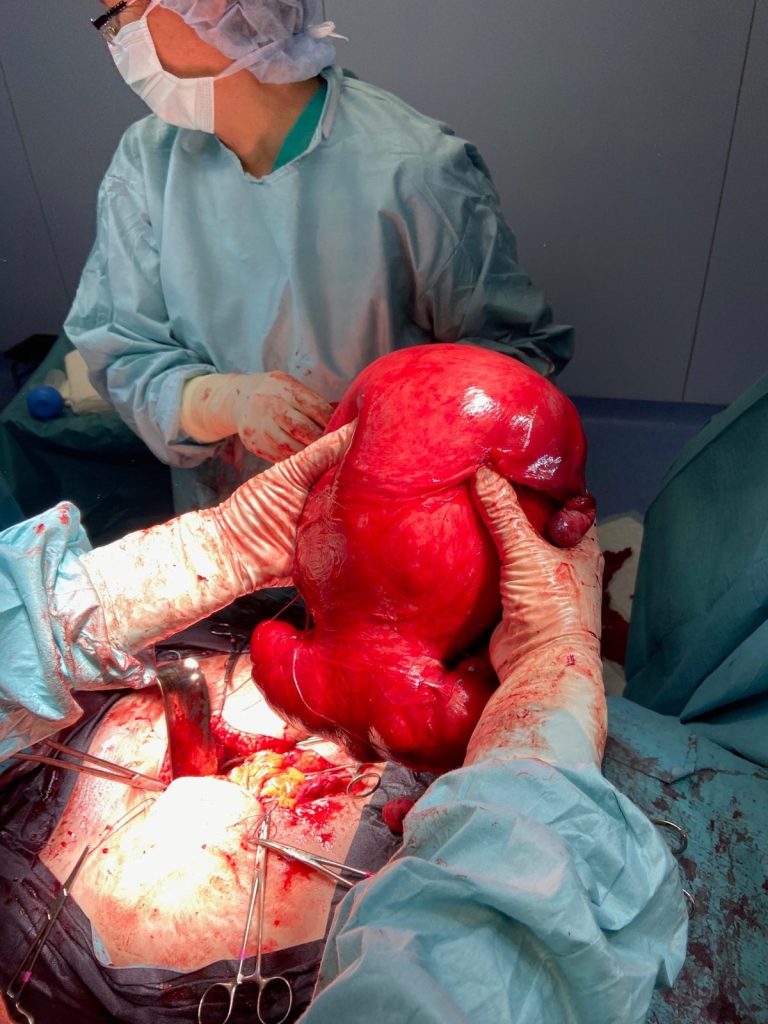
Complications
- Acute abdominal pain from necrosis of a fibroid, from twisting of the fibroid.
- Increased or persistent vaginal bleeding from fibroids inside the uterine cavity and/or increased pain from menstruation.
Treatment
- As the vast majority of benign fibroids require ultrasound control as long as they do not produce symptoms every 6 months or annually
- In case of pain and/or increased vaginal bleeding, there is a possibility of first of all drug treatments such as painkillers, or hormonal treatments and the newest one, ullipristal acetate in tablet form
- In case it is not effective a surgical treatment can be performed with the removal of the fibroids and depending on their location it can be done through hysteroscopy, laparoscopy or laparotomy or also with the total removal of the uterus or total or subtotal hysterectomy
- There is a possibility of shrinking the tumor through tumor embolization or through ultrasound
- Since the presence of uterine fibroids is frequent and 1% will be malignant, there is no need to worry about the presence of asymptomatic fibroids unless they grow
The size of an asymptomatic fibroid is not currently an indication for its removal, although in women of childbearing age who want to become pregnant a fibroid larger than 55 mm may be a candidate for removal
The growth of a fibroid is almost always due to a hormone called estradiol 17 B so they can grow until menopause, because after this and the decrease in the level of hormones in the blood, the size of the fibroid also tends to decrease.